
EARTH · FOSSILS · PALEONTOLOGY
Mary Anning
The Girl Who Found Sea Monsters in a Cliff
She had little money and no place in the scientific societies, yet her finds changed how scientists thought about life long ago.
- 1799 to 1847
- England
- Earth science
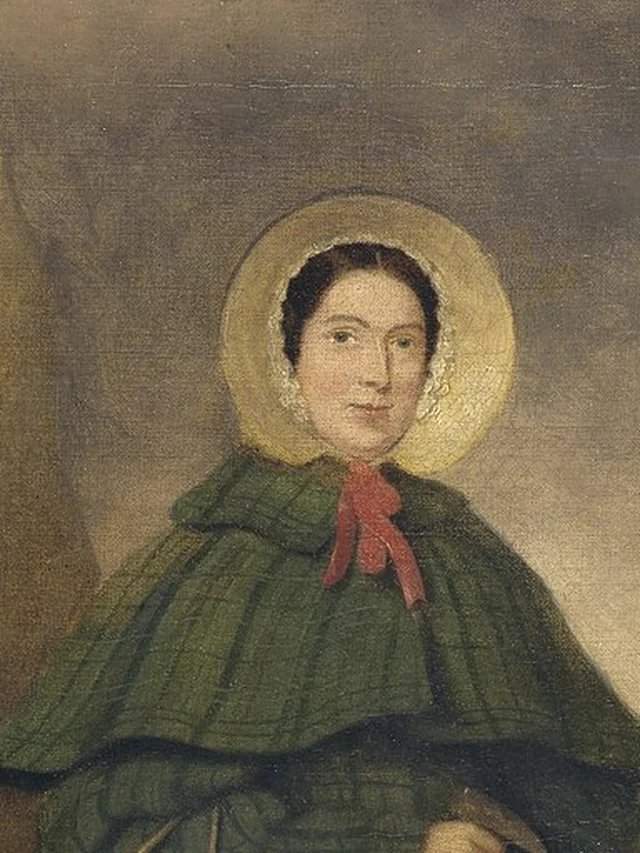

A life of discovery
The question they chased
Mary Anning grew up in Lyme Regis, a small town on the south coast of England. Her family was poor. Her father collected fossils and sold them to visitors, and Mary learned the cliffs beside him. When he died in 1810 he left debts, and the family had to ask for help from the parish. Mary was eleven.
She kept searching. In 1811 her brother Joseph dug out a strange skull. Mary found the rest of the skeleton months later. Accounts give the date as late 1811 or 1812. It was an ichthyosaur, a sea reptile that looked a little like a dolphin with a long, toothy jaw. A local landowner paid the family about 23 pounds for it. On 10 December 1823 she found the first complete skeleton of another sea reptile, the plesiosaur. It had a small head and a very long neck. Scientists studied what she pulled from the rock.
The big ideas
What Mary figured out
A fossil is the preserved remains or imprint of a living thing from long ago. Anning found nearly whole skeletons of animals that no longer exist. A skeleton is harder to argue with than a single tooth. Her finds helped scientists accept that the world once held creatures very unlike today's.
Lyme Regis collectors kept finding odd stones inside fossil skeletons. In 1824 Anning suggested these "bezoar stones" were fossilized droppings. William Buckland later named them coprolites. Scientists still study them to learn what ancient animals ate.
Rock cliffs are built in layers, and each layer holds the remains of its own time. Storms and landslides break the cliff open and let fossils fall out. Anning watched the cliffs closely and worked fast, because the sea would wash the finds away. That patience is what field science looks like.
Key moments
How it unfolded
- 1810Her father dies, and the family falls into debt.
- 1811Her brother digs up an ichthyosaur skull, and Mary finds the rest of the skeleton months later.
- 1823She finds the first complete plesiosaur skeleton.
- 1824She suggests that bezoar stones are fossilized droppings.
- 1835After a money loss, friends and William Buckland help her, and she later receives a small yearly pension of 25 pounds.
- 1847She dies at age 47 in Lyme Regis.
The person behind the science
The woman on the beach
Mary knew loss early. An older sister, also named Mary, had died before she was born, and she was named for her. Money was never safe for her family. She worked outdoors, sometimes with the tide close behind her. In October 1833 a landslide killed her small black-and-white terrier, Tray, right beside her. She wrote to her friend that his death had quite upset her. In another letter she wrote that the world had used her unkindly.
She did not do it alone. Elizabeth Philpot, a fellow collector, became a close friend. Charlotte Murchison wrote to her for years as a friend. Henry De la Beche, a friend from their teenage years, painted a scene of ancient life based on her fossils, and prints of it helped her. He also wrote her eulogy for the Geological Society, which was a first for a woman. Mary kept working, and the friendships kept her going.
Small things that make them human
- A dog named TrayHer terrier went with her on the beach. His death in the 1833 landslide hit her hard.
- An auction for her familyIn 1820 Thomas Birch arranged an auction that raised about 400 pounds for the Annings.
- A teacher who listenedWilliam Buckland hunted fossils with her and later gave the name coprolite to the stones she had first explained.
- No seat at the tableShe could not join the Geological Society or even attend its meetings as a guest. She kept at the work anyway.
A few surprising facts
Did you know
When Mary was 15 months old, lightning struck a tree near her and killed three women beside her. She was revived in a hot bath. Her family said she seemed to blossom afterward.
She once showed her friend Elizabeth Philpot a fossilized ink sac. Philpot used it to make ink and drew the animal it came from.
Some people say the tongue twister about selling seashells by the seashore was about her. Researchers have found no solid evidence for that.
The Geological Society of London did not admit women until 1904. Men often published her finds without naming her.
Why it still matters
What this means for you
Mary Anning never had a degree or a lab. She had a hammer, sharp eyes, and years of practice. Her story shows that a good scientist is someone who looks carefully and keeps looking. It also shows that people who were left out still shaped science. Today, students everywhere can search a creek bed or a roadcut and find something no one has described.
Look closely and keep looking.
CURIOSITY ✦ RIGOR ✦ DISCOVERYTalk about it
Questions for your table
- Mary was kept out of scientific societies because she was a woman and poor. How can a person do real work when others will not give them credit?
- Her friends helped her in different ways. Who helps you stay on track, and how could you help someone else?
- Anning studied one beach for her whole life and still found new things. What place near you could you study that closely?
Try it today
Three small steps
- Notice: Walk outside and pick a rock, a creek bank, or a roadcut. Write down three things you see in it, like layers, colors, or a shell print.
- Question: Pick one thing you noticed and write a question about how it got there.
- Test: Ask an adult or look up your area's rock type, and see if your question can be answered.