
LESSON VIDEOS
Lesson
Videos
Twenty-nine short videos that teach the lessons. Each one plays right here. Each one belongs to a lesson you can open.THE IDEA
Two minutes.
Then we talk.
None of these films are long. They are built to start a class, not to fill one. Watch it once on the projector. Pause where it asks a question. Then the room does the rest.Watch it all the way through once. No notes.
Watch it again and stop where it asks a question. Answer it.
Open the lesson it belongs to. The film was just the door.
VIDEOS
This week’s lessons
The films from Force and Motion, Every Push Counts and One Pull. Newton, friction, ramps and the pull of the nucleus.
The Stubborn Universe
Feed sacks slide forward at a cattle guard. Nothing pushed them. They just kept going.
WATCH IT HERE →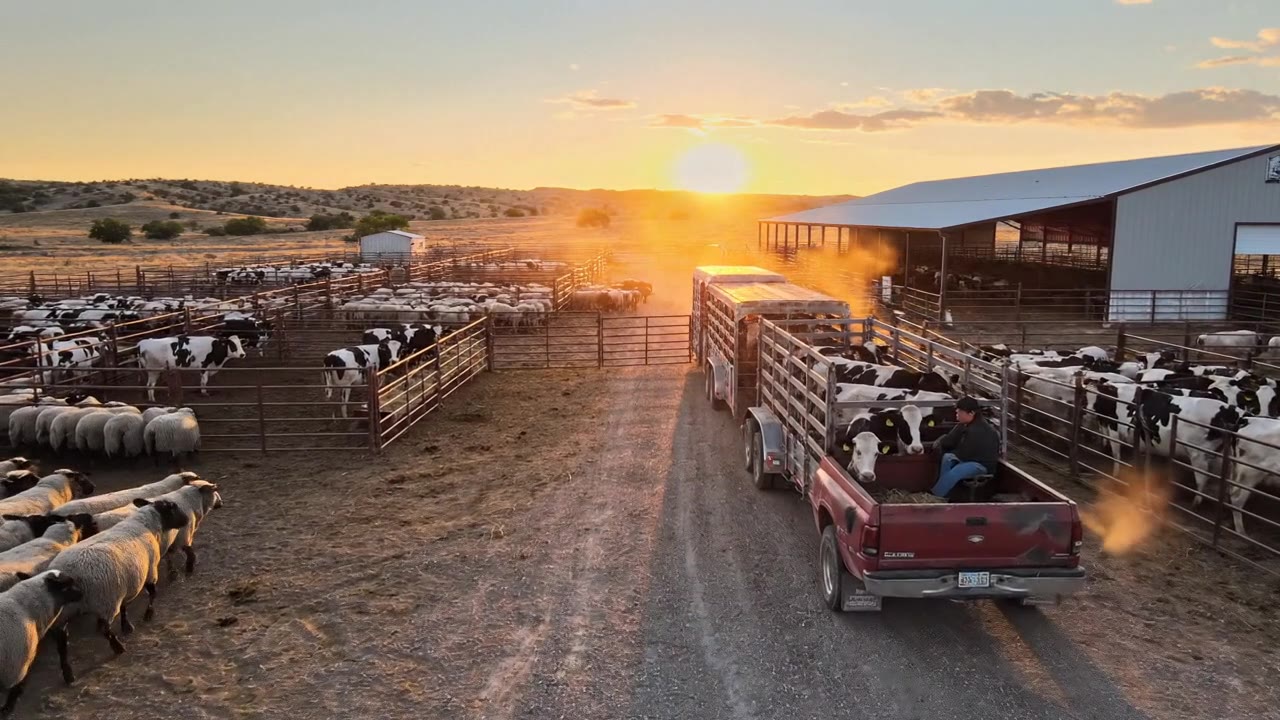
F = ma
A pickup pulls a loaded stock trailer. Every force on it has a name and an arrow.
WATCH IT HERE →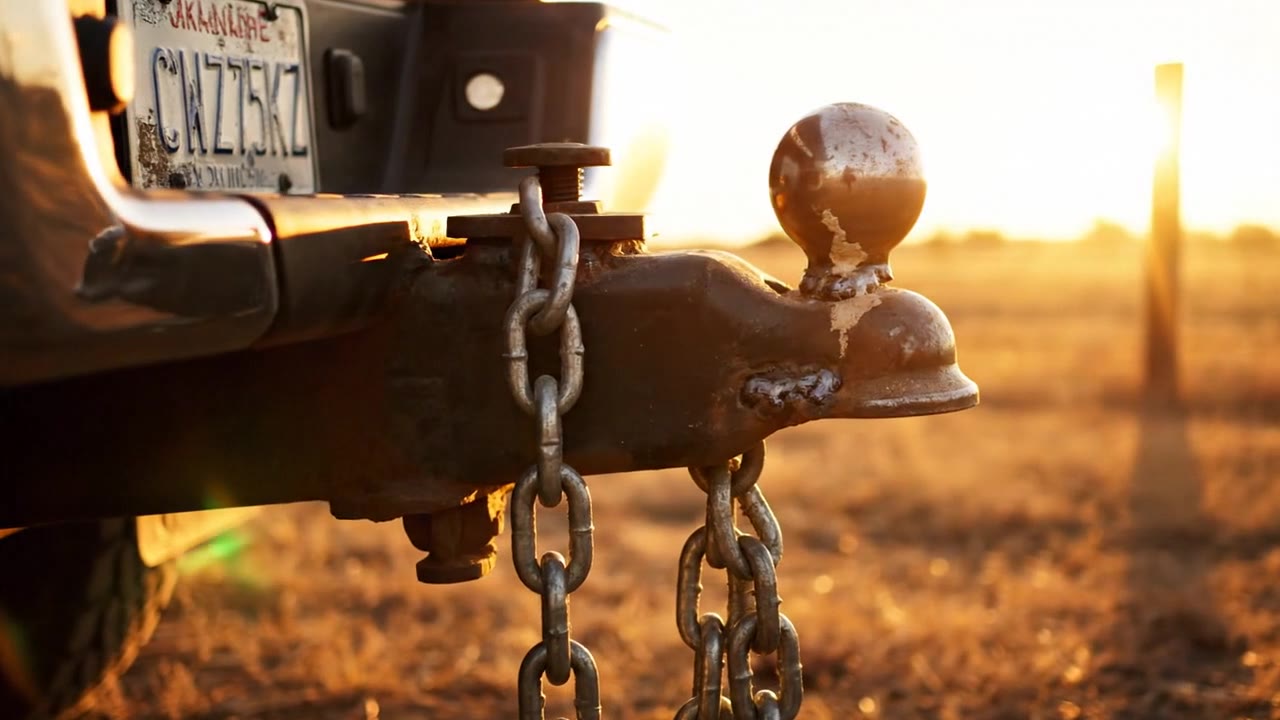
Every Push Pushes Back
Split a truck and trailer at the hitch. Both still speed up. Here is why the forces never cancel.
WATCH IT HERE →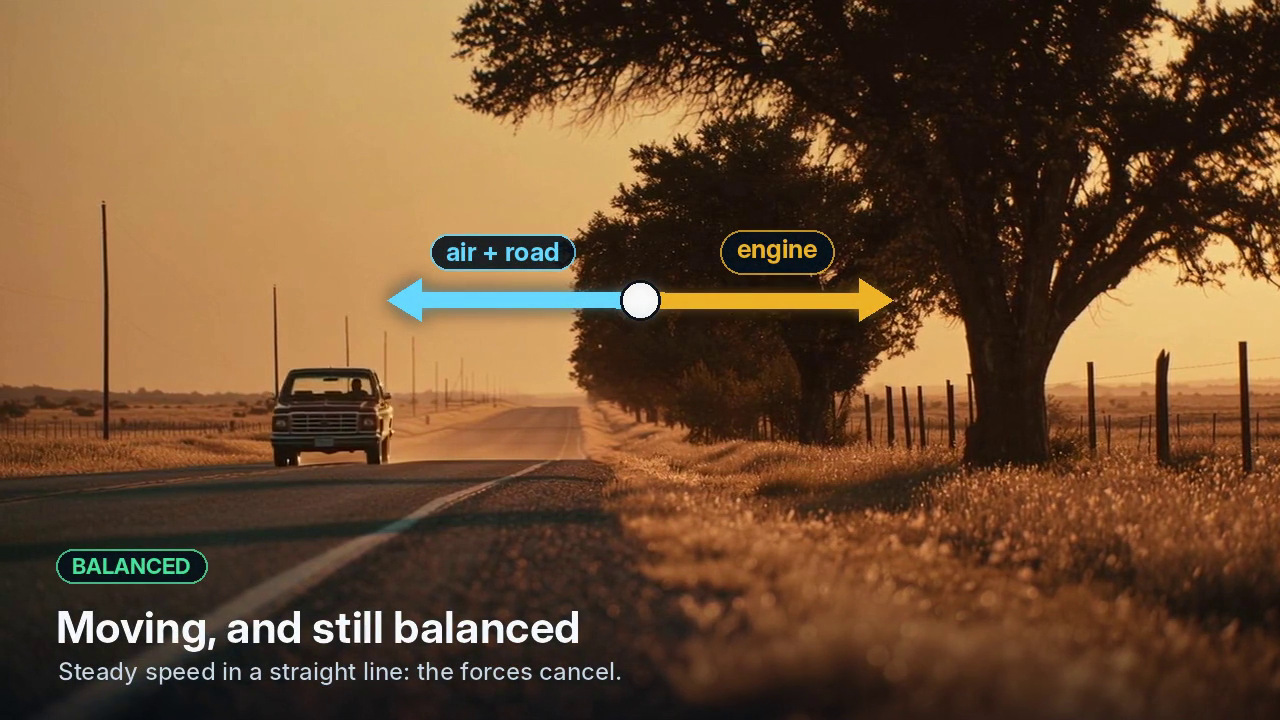
Balanced and Unbalanced Forces
What a newton is. How forces add up. Whether the motion changes.
WATCH IT HERE →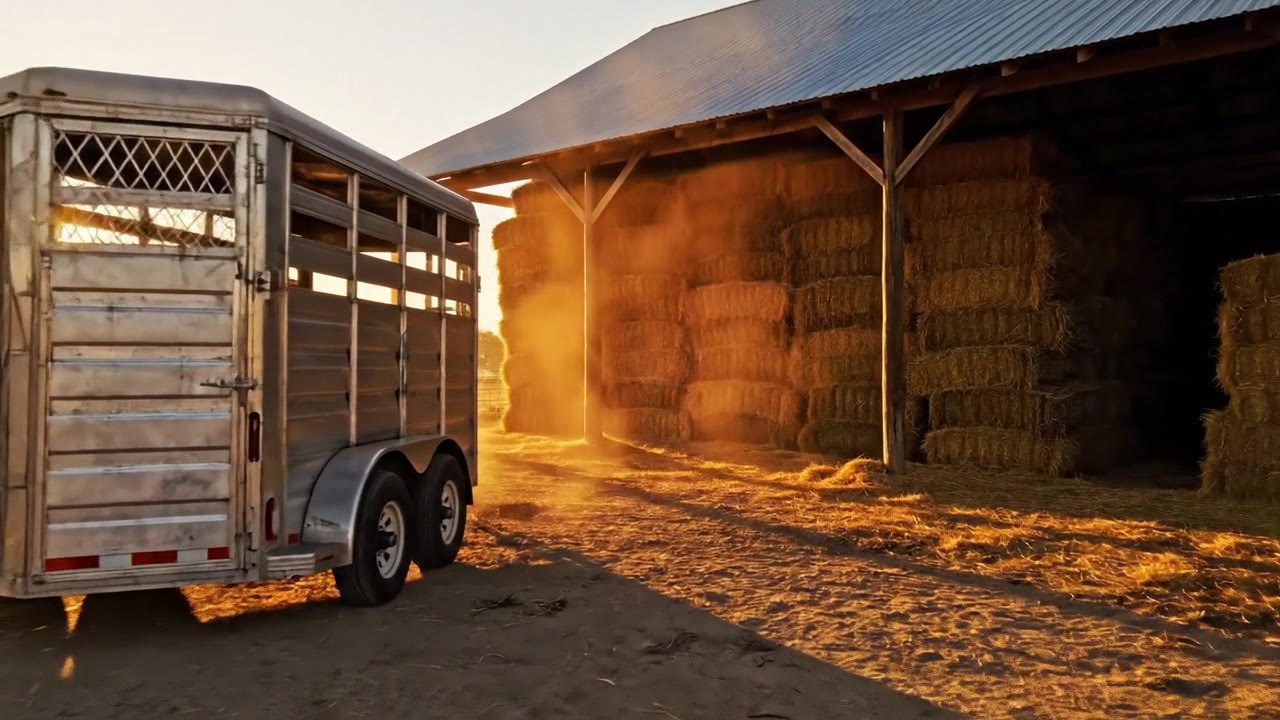
The Force That Fights Back
Why the first push is the hardest. A hay bale on a trailer floor.
WATCH IT HERE →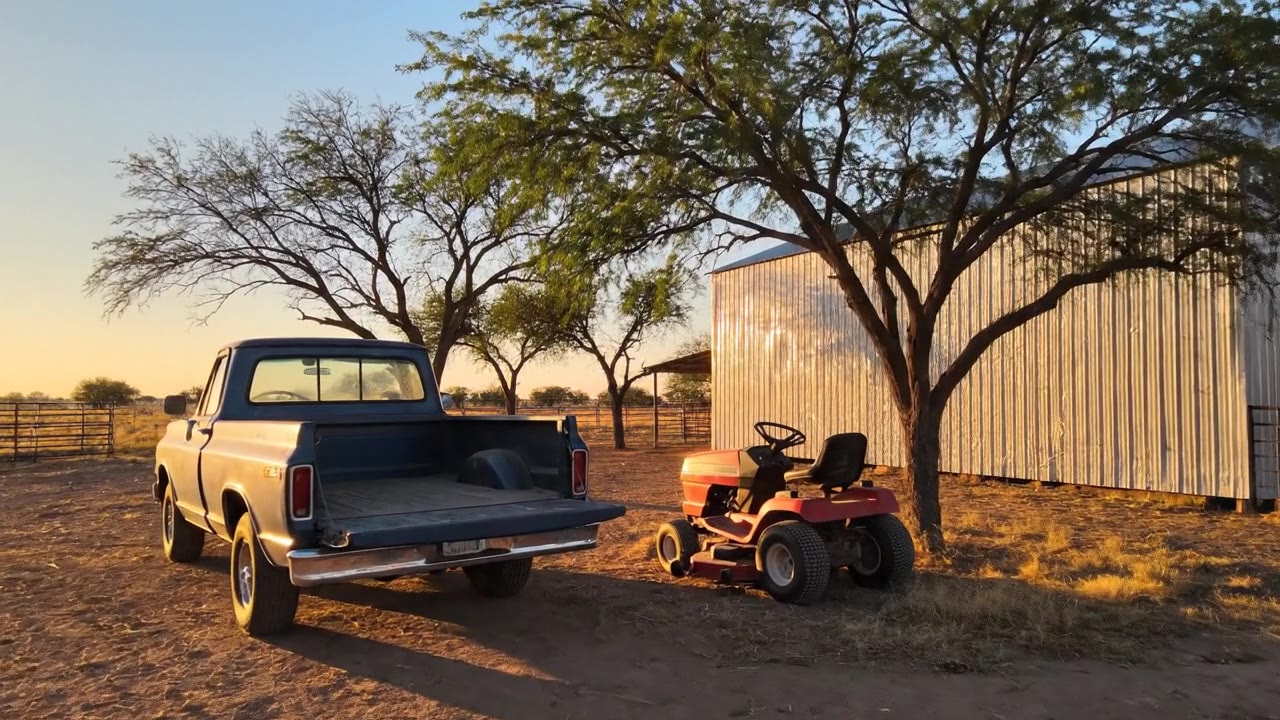
Why the Ramp Wins
A ramp trades force for distance. It never shrinks the work.
WATCH IT HERE →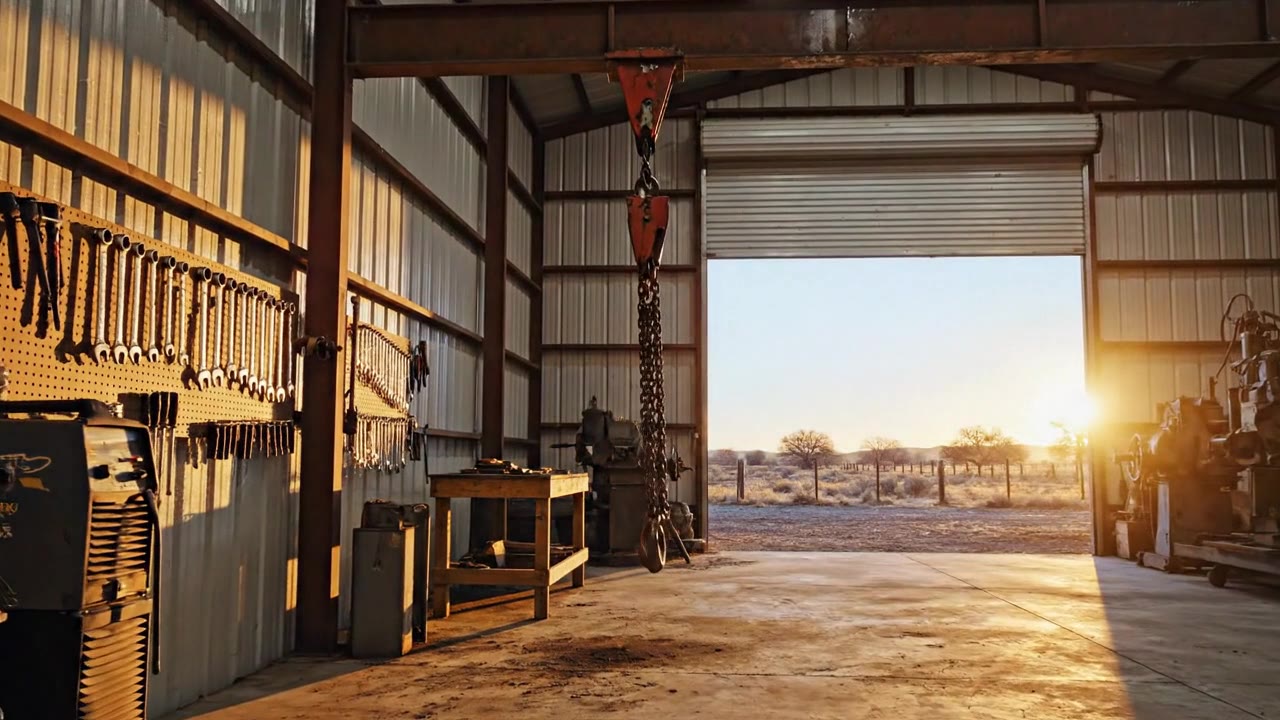
Trading Force for Distance
Levers, pulleys and the screw jack. One trade, every time.
WATCH IT HERE →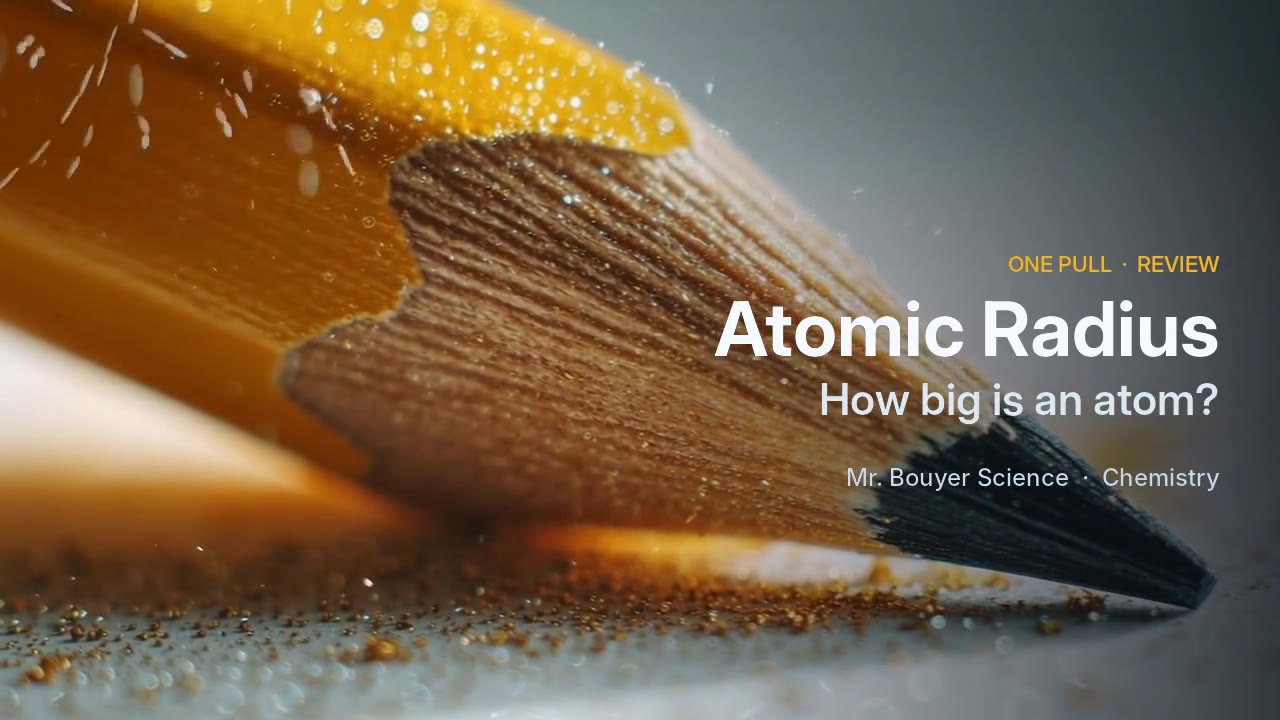
Atomic Radius, Again
Why atoms shrink across a row and grow down a column. Then the ions.
WATCH IT HERE →VIDEOS
Big ideas, told as stories
Longer films with discussion stops built in. Flatland, the light clock and a shadow that measured the Earth.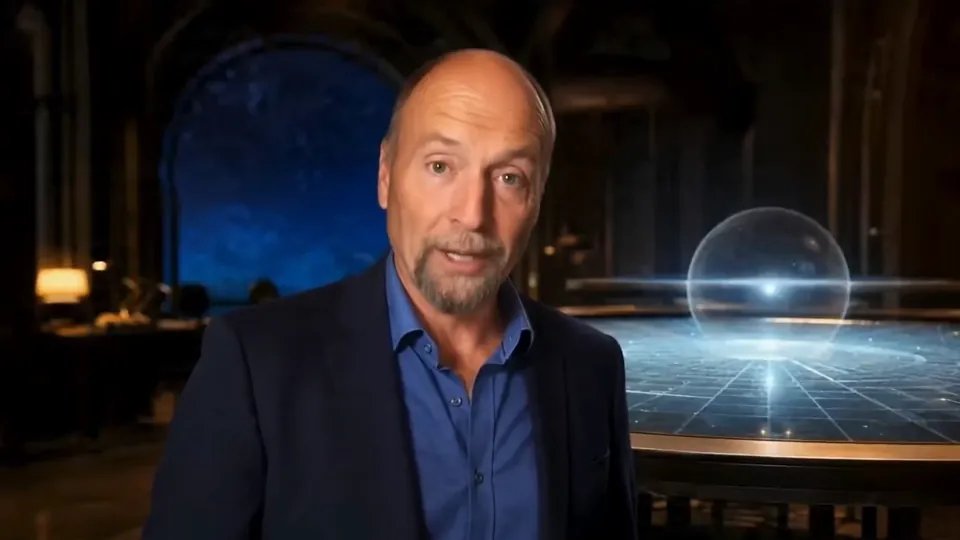
Beyond Flatland
A flat world. A sphere passes through. The flat people see a dot, then a line, then nothing.
WATCH IT HERE →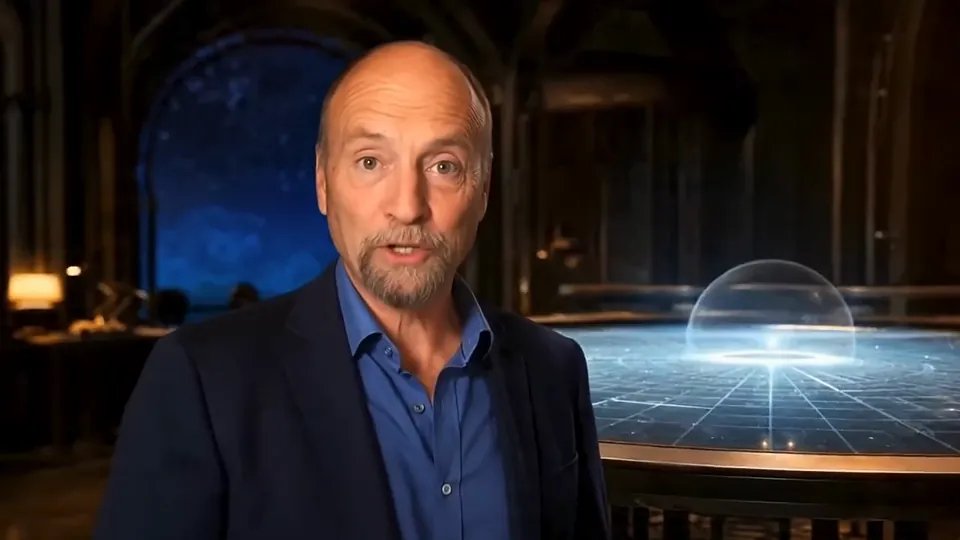
The One Thing That Won’t Change
Why the speed of light never changes. Why moving clocks run slow. The proof from jets and muons.
WATCH IT HERE →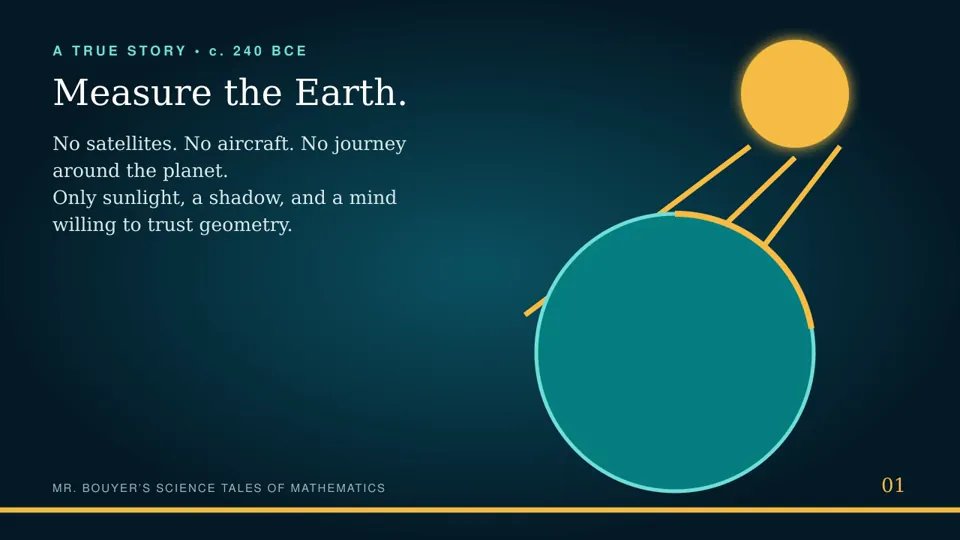
The Man Who Measured Earth with a Shadow
One shadow. A little geometry. One bold idea. The size of the whole planet.
WATCH IT HERE →VIDEOS
One Pull
Seven short chapters. One idea. How hard the nucleus pulls on its outer electrons.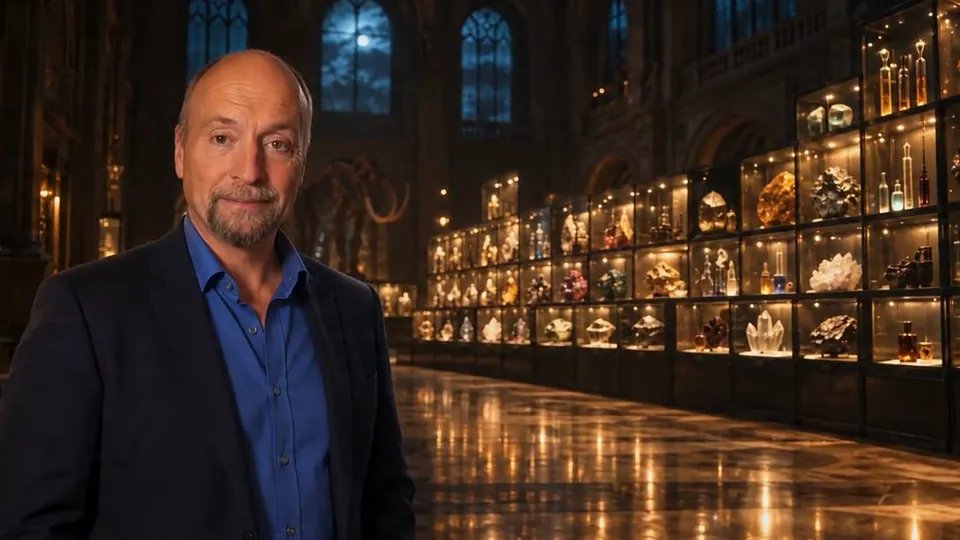
One Pull: The Opening
Step into a hall of the elements and meet the question that runs through the whole series.
WATCH IT HERE →
The Pull
Nuclear charge, distance and shielding. What a valence electron actually feels.
WATCH IT HERE →
Atomic Radius
How big is the atom. Why atoms shrink across a row and grow down a group.
WATCH IT HERE →
Ionization Energy
How hard is it to take an electron away. Why sodium stops at plus one.
WATCH IT HERE →
Electronegativity
Who wins the tug of war over shared electrons. How the answer decides the bond.
WATCH IT HERE →
Metallic Character
How much does an element act like a metal. From the top of a group to the bottom.
WATCH IT HERE →
One Cause
Four trends. One pull. The whole table explained by a single idea.
WATCH IT HERE →VIDEOS
Motion leaves a trail
Three days of motion graphs. A 1973 Charger and a walk down a Lipan hallway. Narrated and captioned.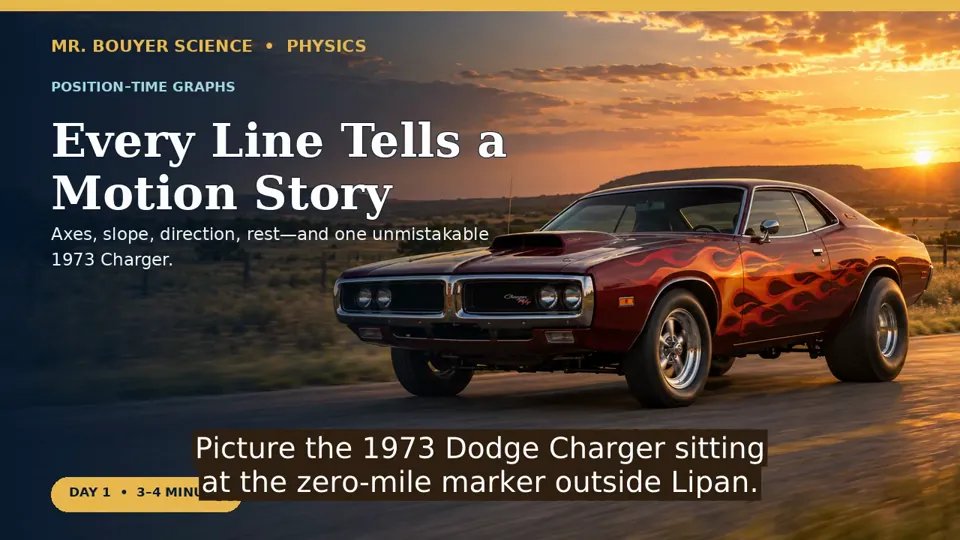
Every Line Tells a Motion Story
Position and time graphs. Axes, slope, rest and direction.
WATCH IT HERE →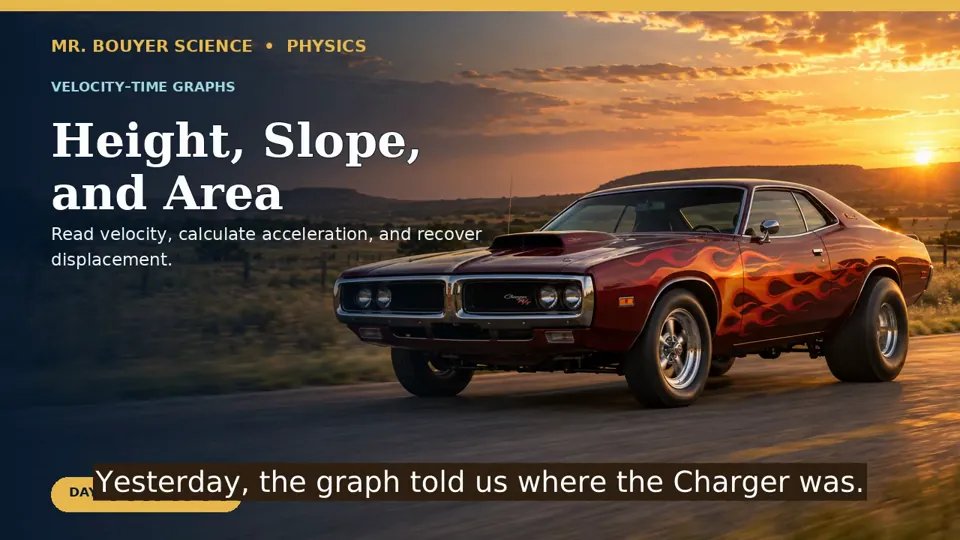
Height, Slope and Area
Velocity and time graphs. Read the velocity. Find acceleration from slope. Recover distance from area.
WATCH IT HERE →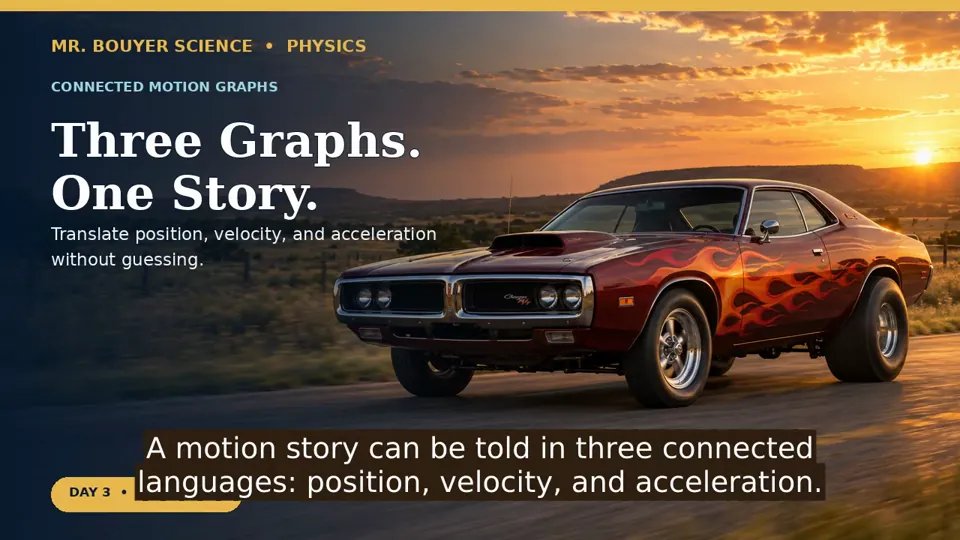
Three Graphs. One Story.
Speeding up, cruising, braking, waiting and reversing. Three graphs that have to agree.
WATCH IT HERE →VIDEOS
What makes motion change?
Forces, Newton’s second law and safer stops. The same Charger from start to finish.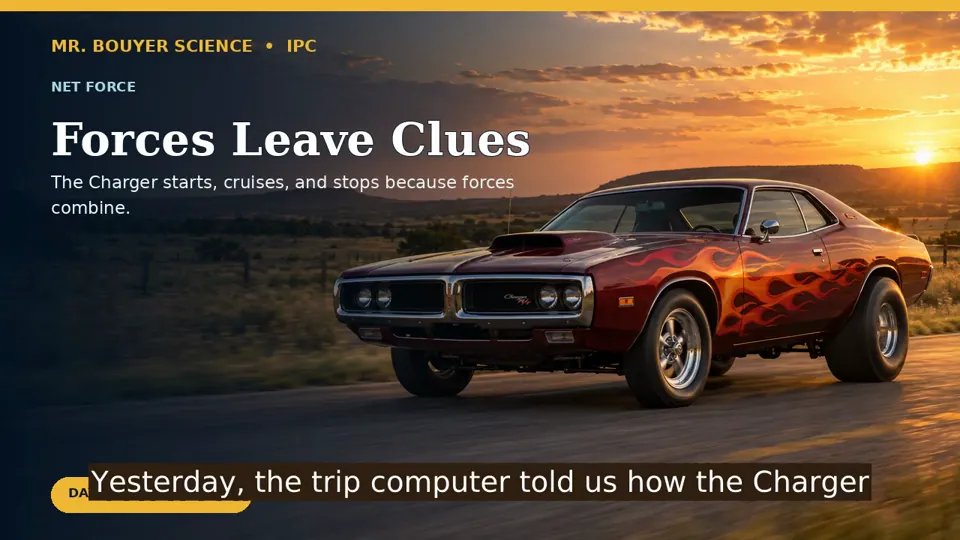
Forces Leave Clues
Why the Charger starts, cruises and stops. Contact and field forces, net force and force diagrams.
WATCH IT HERE →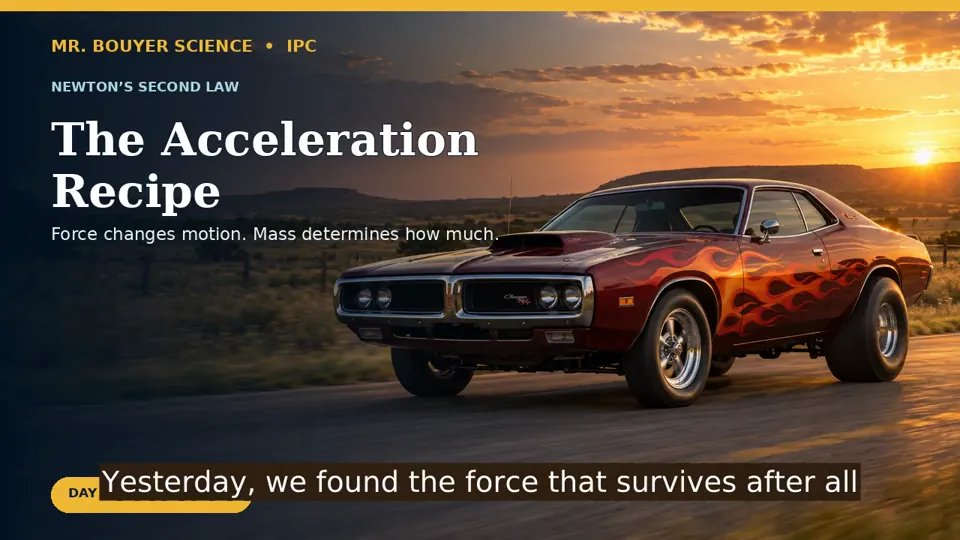
The Acceleration Recipe
Newton’s second law, units and the data tables that separate force from mass.
WATCH IT HERE →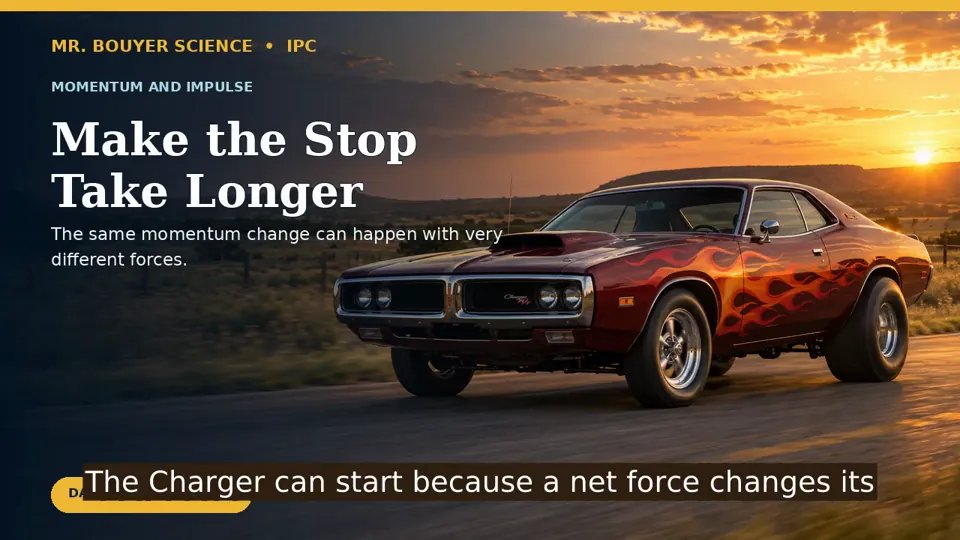
Make the Stop Take Longer
Momentum, impulse and stopping time. Why a softer stop is a safer one.
WATCH IT HERE →VIDEOS
One idea in a few minutes
Short openers, each built to start a single class period. A can, a table with holes, a trip that goes nowhere.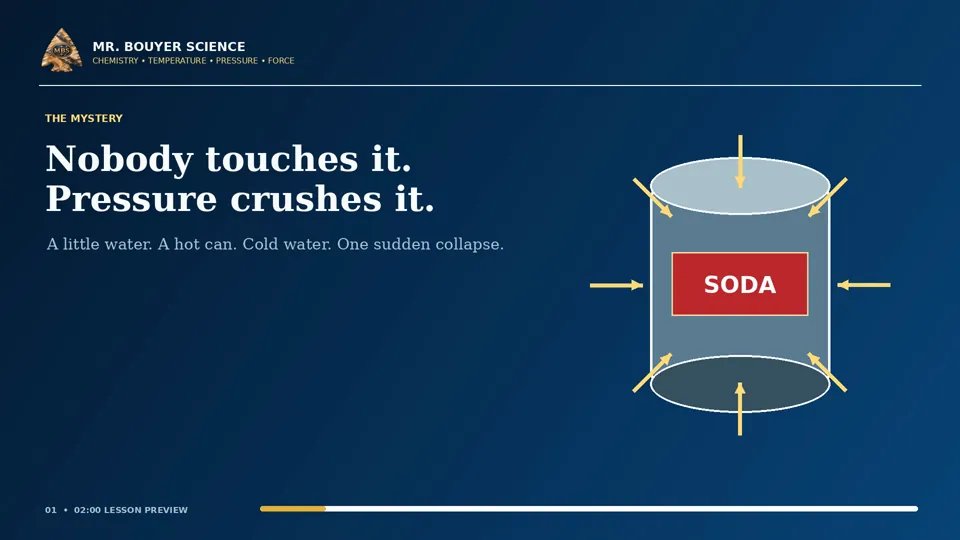
The Can That Crushed Itself
What a newton means. How temperature changes pressure. Why air can crush a can.
WATCH IT HERE →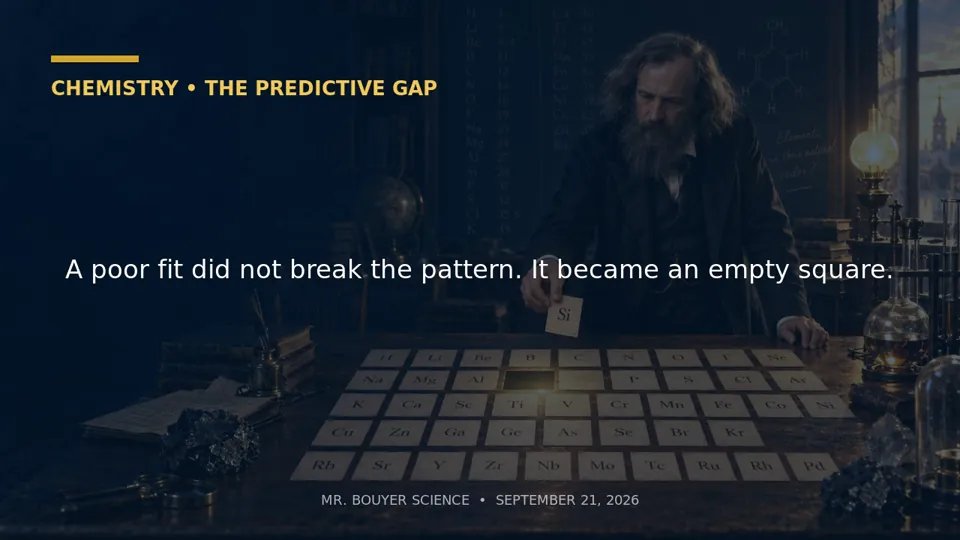
A Table With Holes In It
How Mendeleev’s empty squares became predictions. How germanium proved him right.
WATCH IT HERE →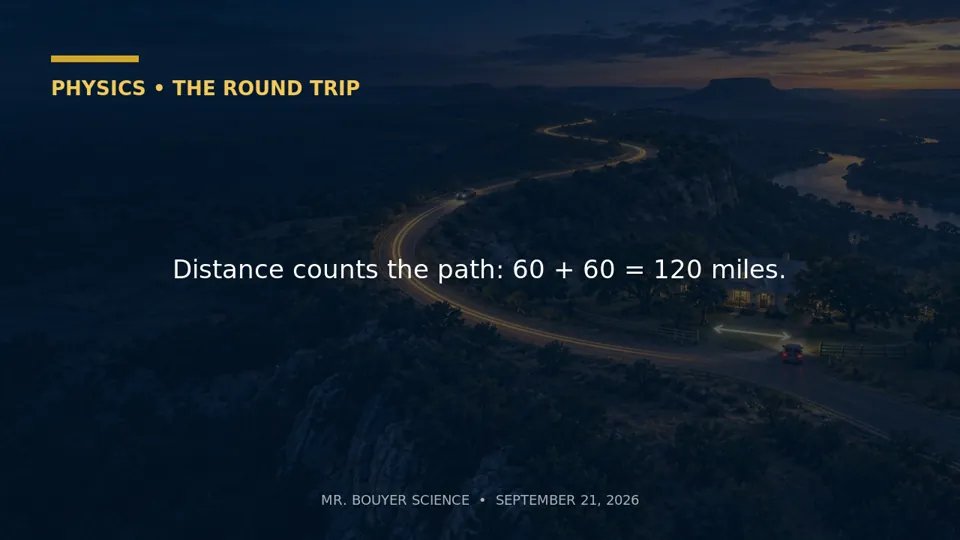
The Trip That Goes Nowhere
Drive 120 miles and end up where you started. Distance versus displacement.
WATCH IT HERE →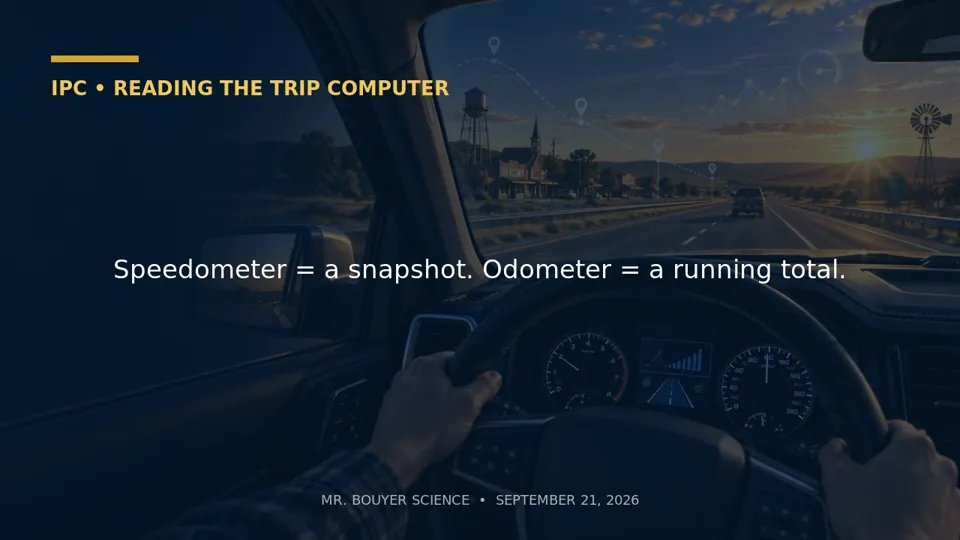
Reading the Trip Computer
A trip hidden inside four numbers. Snapshot speed, running totals and average speed.
WATCH IT HERE →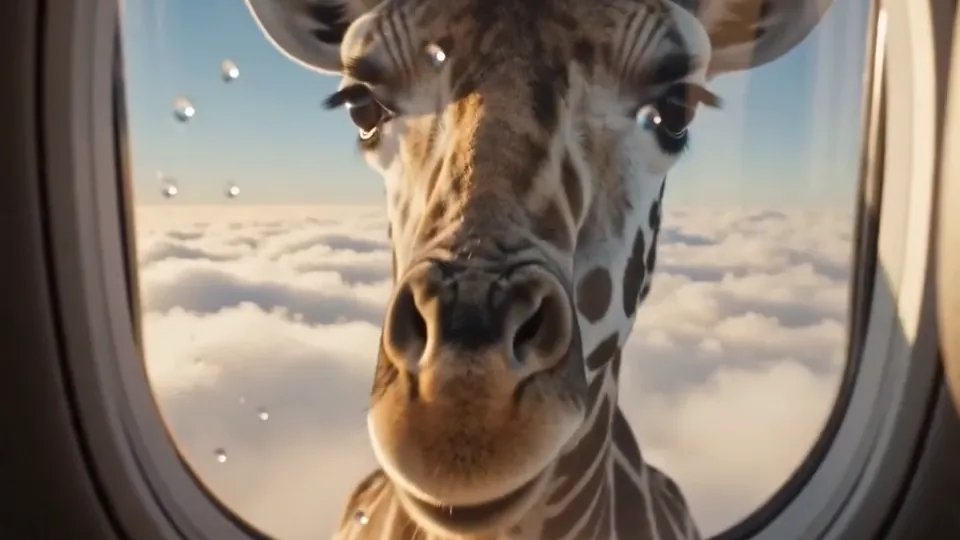
A Giraffe at 30,000 Feet
Someone is looking in the airplane window. No sound. No lesson. Just a good start to the day.
WATCH IT HERE →A good film does not finish the lesson. It starts the argument.
WATCH TODAY’S SCIENCE WONDER →Films are written and narrated by Johnny Bouyer. Scenes are made for the lessons they belong to.
FILM 01 · PHYSICS
The Stubborn Universe
Brake hard and the feed sacks in the bed slide forward. Nothing pushed them. They simply kept doing what they were doing. That stubbornness has a name. Inertia. It is the reason a seatbelt is the cheapest physics in the vehicle.
This film follows a pickup and a gooseneck trailer down a ranch road and asks one question at every turn. What changed the motion? If nothing did, the motion did not change.
Question to carry. If a moving thing needs nothing to keep it moving, why does a wheelbarrow stop?
TRY Pause at the cattle guard. Say what the sacks will do before the film shows you.
Use the full-screen button in the player for the projector. Open the lesson it belongs to.
Keep going
FILM 02 · PHYSICS
F = ma
Three letters. One of the most useful lines in all of science. Push harder and it speeds up faster. Load it heavier and it speeds up slower. That is the whole law. The film draws every force on a pickup pulling a stock trailer so you can see the law before you calculate it.
Gravity pulls down. The road pushes up. The engine pulls forward. Friction drags back. Add them all up and what is left is the net force. The net force is what accelerates the truck.
Question to carry. Double the mass and keep the force the same. What happens to the acceleration?
TRY Pause on the free-body diagram. Name each arrow before the narration does.
Use the full-screen button in the player for the projector. Open the lesson it belongs to.
Keep going
FILM 03 · PHYSICS
Every Push Pushes Back
The truck pulls the trailer. The trailer pulls the truck back just as hard. So how does anything move? The two forces act on two different objects. They never meet on the same thing, so they never cancel.
The film splits the rig at the hitch and follows each half on its own. Once you see that trick, the third law stops being a riddle and starts being a tool.
Question to carry. If action and reaction are always equal, why does the trailer move at all?
TRY Pause at the hitch. Draw the two forces. Put each one on the object it acts on.
Use the full-screen button in the player for the projector. Open the lesson it belongs to.
Keep going
FILM 04 · IPC
Balanced and Unbalanced Forces
Two kids pull a rope the same way. The rope moves. Two kids pull the rope opposite ways with the same force. It does not. Forces add like arrows. Same direction, they stack. Opposite, they fight. What is left over is the net force.
If the net force is zero, the motion stays what it was. If it is not zero, the motion changes. That is the whole film. Everything else is practice.
Question to carry. Can an object be moving while the forces on it are balanced?
TRY Pause on each tug of war. Add the arrows yourself before the answer comes.
Use the full-screen button in the player for the projector. Open the lesson it belongs to.
Keep going
FILM 05 · IPC
The Force That Fights Back
Push a hay bale across a trailer floor. The first inch is the hardest. Once it is sliding, it gets easier. That is two kinds of friction. Static, which holds. Kinetic, which drags.
The film shows where friction comes from. Two surfaces pressed together. Press harder and it grips harder. That is the normal force doing its job.
Question to carry. Why is it harder to start a heavy box sliding than to keep it sliding?
TRY Pause at the first push. Guess which is bigger, static or kinetic. Then watch.
Use the full-screen button in the player for the projector. Open the lesson it belongs to.
Keep going
FILM 06 · IPC
Why the Ramp Wins
Nobody lifts a riding mower straight into a pickup. You use a ramp. The ramp lets you push with less force. But you push over a longer distance. The work comes out the same.
That trade is the secret of every simple machine. Less force, more distance. Or more force, less distance. Never less work.
Question to carry. If the ramp makes the push easier, where did the rest of the effort go?
TRY Pause on the two numbers. Force and distance. Multiply them in your head.
Use the full-screen button in the player for the projector. Open the lesson it belongs to.
Keep going
FILM 07 · IPC
Trading Force for Distance
A lever. A pulley. A screw jack under a truck. They look nothing alike. They do the same thing. Effort distance for load distance. You move your end a long way so the load moves a short way with a bigger force.
The film lines them up side by side so the trade is plain. Then it asks the one question that catches everybody. Where does the extra force come from?
Question to carry. Can a machine ever give you more work out than you put in?
TRY Pause on the screw jack. Count how many turns it takes to lift the truck one inch.
Use the full-screen button in the player for the projector. Open the lesson it belongs to.
Keep going
FILM 08 · CHEMISTRY
Atomic Radius, Again
Chlorine is heavier than sodium. It is also smaller. That sounds wrong until you see what the nucleus is doing. More protons, same shell, harder pull. The atom tightens up.
Go down a column and a whole new shell is added. The atom grows. Then take an electron away and watch the ion shrink. Add one and watch it swell. One pull explains it all.
Question to carry. Why does an atom get smaller as you go across a row, when it has more electrons?
TRY Pause on sodium and chlorine. Say which one is bigger before the film tells you.
Use the full-screen button in the player for the projector. Open the lesson it belongs to.
Keep going
FILM 09 · CLASSROOM FILM
Beyond Flatland
Imagine a world with no up. Only forward, back, left and right. Now drop a ball through it. The people there would see a dot appear, grow into a line, shrink and vanish. They would call it magic. You would call it a ball.
This film uses that flat world to ask what we might be missing. What would a fourth direction look like to us? A dot, a line and then nothing. Maybe.
Question to carry. What would a cube look like to someone who could only see in two dimensions?
TRY Pause when the sphere is halfway through. Draw what the flat people see.
Use the full-screen button in the player for the projector. Open the lesson it belongs to.
Keep going
FILM 10 · CLASSROOM FILM
The One Thing That Won’t Change
Throw a ball forward on a moving train and it goes faster than the train. Shine a light forward and it does not. Light goes the same speed for everybody. Einstein took that one fact seriously and the whole picture of time had to change.
The film builds a light clock, puts it on a moving ship and shows you why the moving clock has to tick slower. Then it shows the evidence. Atomic clocks on jets. Muons that live too long.
Question to carry. If light goes the same speed for everyone, what has to give?
TRY Pause at the light clock. Trace the path of the light on the moving ship with your finger.
Use the full-screen button in the player for the projector. Open the lesson it belongs to.
Keep going
FILM 11 · CLASSROOM FILM
The Man Who Measured Earth with a Shadow
More than two thousand years ago a librarian in Egypt heard that at noon on the longest day, a well in a town to the south had no shadow in it. In his own city, at the same moment, a post did cast a shadow. He measured the angle. Then he did something no one had done.
He used that angle and the distance between the two towns to work out how big the Earth is. He was close. Very close. With a stick and a shadow.
Question to carry. What two measurements did Eratosthenes need, and which one was hardest to get?
TRY Pause on the two sticks. Find the angle in the drawing before the film labels it.
Use the full-screen button in the player for the projector. Open the lesson it belongs to.
Keep going
FILM 12 · ONE PULL
One Pull: The Opening
The periodic table has patterns. Atoms get smaller across a row. Harder to ionize. Pull harder on electrons. Four trends in the textbook. Four things to memorize. Or one thing to understand.
This is the opening. It walks into the hall of the elements and asks the question the rest of the series answers. How hard does the nucleus pull?
Question to carry. What is the one thing every periodic trend has in common?
TRY Watch it before the series. Then watch it again after. See if the question sounds different.
Use the full-screen button in the player for the projector. Open the lesson it belongs to.
Keep going
FILM 13 · ONE PULL
The Pull
A valence electron does not feel the whole nucleus. The inner electrons get in the way. They shield it. What it feels is the charge that leaks through. Chemists call that the effective nuclear charge.
Three things decide the pull. How many protons. How far away. How many electrons sit in between. Change any one and the pull changes.
Question to carry. Why does a sodium valence electron feel a pull of about one, when sodium has eleven protons?
TRY Pause on the shielding picture. Count the inner electrons.
Use the full-screen button in the player for the projector. Open the lesson it belongs to.
Keep going
FILM 14 · ONE PULL
Atomic Radius
Across a row, each new element adds a proton and an electron to the same shell. The pull goes up. The atom shrinks. Down a column, each new element adds a whole shell. The atom grows.
That is it. Two moves on the table. Two answers. The film draws the atoms to scale so you can see it.
Question to carry. Which is bigger, potassium or sodium? Which is bigger, sodium or chlorine?
TRY Pause on the row. Point to the biggest atom and the smallest before the film does.
Use the full-screen button in the player for the projector. Open the lesson it belongs to.
Keep going
FILM 15 · ONE PULL
Ionization Energy
Pull an electron off an atom. It costs energy. The harder the nucleus pulls, the more it costs. Small atoms with a strong pull charge the most. Big atoms with a weak pull give it up cheap.
Then take a second electron from sodium. The price jumps. The next one is in a full inner shell, close to the nucleus. That jump is why sodium is always plus one.
Question to carry. Why does the second ionization energy of sodium jump so high?
TRY Pause on the ladder of energies. Find the big step.
Use the full-screen button in the player for the projector. Open the lesson it belongs to.
Keep going
FILM 16 · ONE PULL
Electronegativity
Two atoms share a pair of electrons. They do not share evenly. The one that pulls harder gets more. Electronegativity is the name for that pull. Fluorine pulls hardest of all.
Subtract the two numbers. Small gap, the electrons are shared about evenly. Big gap, one atom takes them. In the middle, they lean. That lean is a polar bond.
Question to carry. What does the difference in electronegativity tell you about a bond?
TRY Pause on the tug of war. Say which atom wins before the rope moves.
Use the full-screen button in the player for the projector. Open the lesson it belongs to.
Keep going
FILM 17 · ONE PULL
Metallic Character
A metal lets go of its electrons. A nonmetal holds on. So an element with a weak pull acts like a metal. An element with a strong pull does not. The weakest pulls are at the bottom left of the table. That is where the metals are.
Go up a group and the pull tightens. The element acts less like a metal. Go across a row and the same thing happens. Silicon sits right on the line.
Question to carry. Why does metallic character run opposite to electronegativity?
TRY Pause on the staircase line. Name one element on each side of it.
Use the full-screen button in the player for the projector. Open the lesson it belongs to.
Keep going
FILM 18 · ONE PULL
One Cause
Atomic radius. Ionization energy. Electronegativity. Metallic character. Four trends. Four arrows on the table. Students memorize them and forget them by Friday.
They are one thing. How hard the nucleus pulls on the outer electrons. Know that and you can work out all four. This is the film that puts it together.
Question to carry. Pick any trend on the table. Explain it with the pull alone.
TRY Watch this one last. Then try to explain each trend to someone without the word trend.
Use the full-screen button in the player for the projector. Open the lesson it belongs to.
Keep going
FILM 19 · MOTION LEAVES A TRAIL
Every Line Tells a Motion Story
A line on a graph is a story. Flat means stopped. Rising means moving away. Falling means coming back. Steep means fast. This film teaches you to read the story before you do any math.
The Charger pulls out, cruises and stops. Each move draws a different line. Learn the four shapes and you can read any trip.
Question to carry. What does a line sloping down tell you about the motion?
TRY Pause on each graph and tell the story of the Charger out loud.
Use the full-screen button in the player for the projector. Open the lesson it belongs to.
Keep going
FILM 20 · MOTION LEAVES A TRAIL
Height, Slope and Area
A velocity graph hides two tools. The slope is the acceleration. The area under the line is the distance. Two numbers from one picture.
The film walks through both with the Charger. Then it hands you a graph and asks for both numbers.
Question to carry. On a velocity and time graph, what does the area under the line mean?
TRY Pause on the shaded area. Count the squares before the film does.
Use the full-screen button in the player for the projector. Open the lesson it belongs to.
Keep going
FILM 21 · MOTION LEAVES A TRAIL
Three Graphs. One Story.
Position. Velocity. Acceleration. Three graphs of the same trip. They have to agree with each other. If the velocity is flat, the position is a straight slope and the acceleration is zero.
The film takes one drive and draws all three. Then it breaks one on purpose and asks you to find the lie.
Question to carry. If the velocity graph is a flat line above zero, what does the position graph look like?
TRY Pause on the three stacked graphs. Check that each stretch agrees.
Use the full-screen button in the player for the projector. Open the lesson it belongs to.
Keep going
FILM 22 · WHAT MAKES MOTION CHANGE
Forces Leave Clues
Every change in motion has a cause. A push or a pull. Some you can see, like a hand on a door. Some you cannot, like gravity. The film sorts them and draws them as arrows.
Add the arrows. What is left is the net force. If it is zero, nothing changes. If it is not, something does.
Question to carry. Name one contact force and one field force acting on you right now.
TRY Pause on the force diagram. Add the arrows yourself.
Use the full-screen button in the player for the projector. Open the lesson it belongs to.
Keep going
FILM 23 · WHAT MAKES MOTION CHANGE
The Acceleration Recipe
More force, more acceleration. More mass, less acceleration. That is the recipe. The film runs two experiments. Change the force and keep the mass. Then change the mass and keep the force.
The tables tell the story. Double the force and the acceleration doubles. Double the mass and it halves.
Question to carry. What unit is a newton made of?
TRY Pause on each table. Predict the next row before it fills in.
Use the full-screen button in the player for the projector. Open the lesson it belongs to.
Keep going
FILM 24 · WHAT MAKES MOTION CHANGE
Make the Stop Take Longer
A moving car carries momentum. To stop it, something has to take that momentum away. The only question is how fast. Stop in a tenth of a second and the force is huge. Stop in a full second and it is ten times smaller.
Seat belts stretch. Airbags give. Crumple zones fold. Every one of them is a way to make the stop take longer.
Question to carry. Why does a longer stop mean a smaller force?
TRY Pause on the crash test. Count how long the stop takes with and without the airbag.
Use the full-screen button in the player for the projector. Open the lesson it belongs to.
Keep going
FILM 25 · QUICK LESSON
The Can That Crushed Itself
Heat a little water in a can. Flip it into cold water. It crushes itself in a blink. Nothing hit it. The air did. The same air that is pressing on you right now.
The steam inside pushed out. Then it condensed and the push was gone. The air outside never stopped pushing. That is all it took.
Question to carry. What was pushing on the can before it crushed, and what changed?
TRY Pause right before the flip. Say what will happen.
Use the full-screen button in the player for the projector. Open the lesson it belongs to.
Keep going
FILM 26 · QUICK LESSON
A Table With Holes In It
Mendeleev laid the elements out by weight and by behavior. Some squares did not fit anything he knew. He left them empty. Then he did something bold. He said what would be found there.
Years later germanium turned up. Its weight, its density and its behavior matched his guess. The holes were the proof.
Question to carry. Why was leaving a square empty braver than filling it?
TRY Pause on the empty square. Guess what kind of element belongs there.
Use the full-screen button in the player for the projector. Open the lesson it belongs to.
Keep going
FILM 27 · QUICK LESSON
The Trip That Goes Nowhere
Drive to Fort Worth and back. The odometer says 120 miles. Your displacement says zero. You ended where you began. Both numbers are true. They answer different questions.
Distance is how far you traveled. Displacement is how far you are from where you started, and which way. Speed goes with the first. Velocity goes with the second.
Question to carry. Can your average velocity be zero on a trip where your average speed was 60 miles an hour?
TRY Pause at the turnaround. Say the distance and the displacement.
Use the full-screen button in the player for the projector. Open the lesson it belongs to.
Keep going
FILM 28 · QUICK LESSON
Reading the Trip Computer
The dash on a truck shows four numbers. Speed right now. Miles so far. Time so far. Average speed. Three of them are about the whole trip. One is about this instant.
Divide miles by hours and you get the average. It will not match the speedometer. It is not supposed to.
Question to carry. Why is the average speed lower than the speed you see most of the time on the highway?
TRY Pause on the dash. Work out the average from the other numbers.
Use the full-screen button in the player for the projector. Open the lesson it belongs to.
Keep going
FILM 29 · BRAIN BREAK
A Giraffe at 30,000 Feet
Ten seconds. No lesson. A giraffe looking in the window of a plane. Sometimes the room needs a smile before it needs a question.
Play it. Laugh. Then get to work.
Question to carry. What would it take for that to really happen?
TRY Play it once. Do not explain it.
Use the full-screen button in the player for the projector.
Keep going